
Protective Coatings for Steel in Coastal Sri Lanka
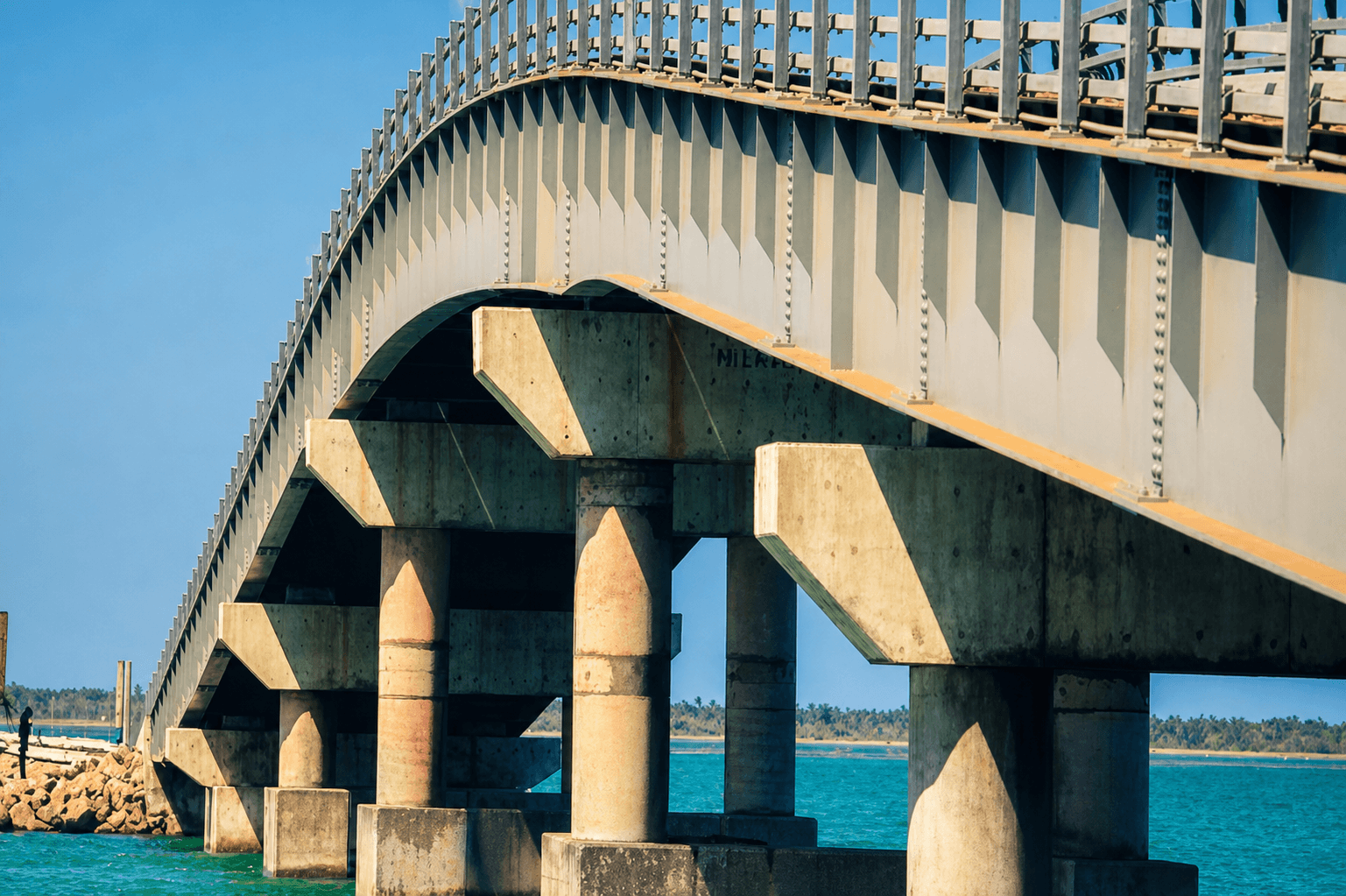
Coastal air carries chlorides that settle on exposed steel and attract moisture. In ports, hotels, factories and infrastructure near the sea, condensation and rain keep surfaces wet long enough for corrosion to accelerate. Effective protective coatings for steel in Sri Lanka must be selected for this exposure rather than for colour alone.
A coating system acts as a barrier and, depending on the primer, may provide additional corrosion-control mechanisms. Its life is determined as much by preparation and application as by the products named in the specification.
Why coastal steel corrodes quickly
- Airborne salt deposits increase the conductivity of surface moisture
- High humidity and condensation extend the time steel remains wet
- Strong ultraviolet exposure degrades unsuitable finish coats
- Crevices, bolts and horizontal ledges retain salt and water
- Damaged edges and welds often receive less coating thickness
- Industrial pollutants can add chemical stress to marine exposure
Survey the structure and operating environment
Record corrosion, coating breakdown, section loss, water traps and inaccessible areas. Identify the existing system if possible and test adhesion where overcoating is being considered. Structural steel with significant loss, distortion or cracked connections needs engineering assessment before cosmetic treatment.
The survey should also consider distance from the sea, shelter, wash-down, temperature, chemical fumes, abrasion, fire-protection requirements and future access. Steel inside an open coastal plant faces different conditions from an enclosed air-conditioned building, even at the same site.
Surface preparation determines adhesion
Remove oil, grease and soluble salts before or during mechanical preparation. Abrasive blasting can remove rust and old coating while creating a defined anchor profile. Where blasting is impractical, power-tool preparation may be specified, but the achievable cleanliness and expected service life can differ.
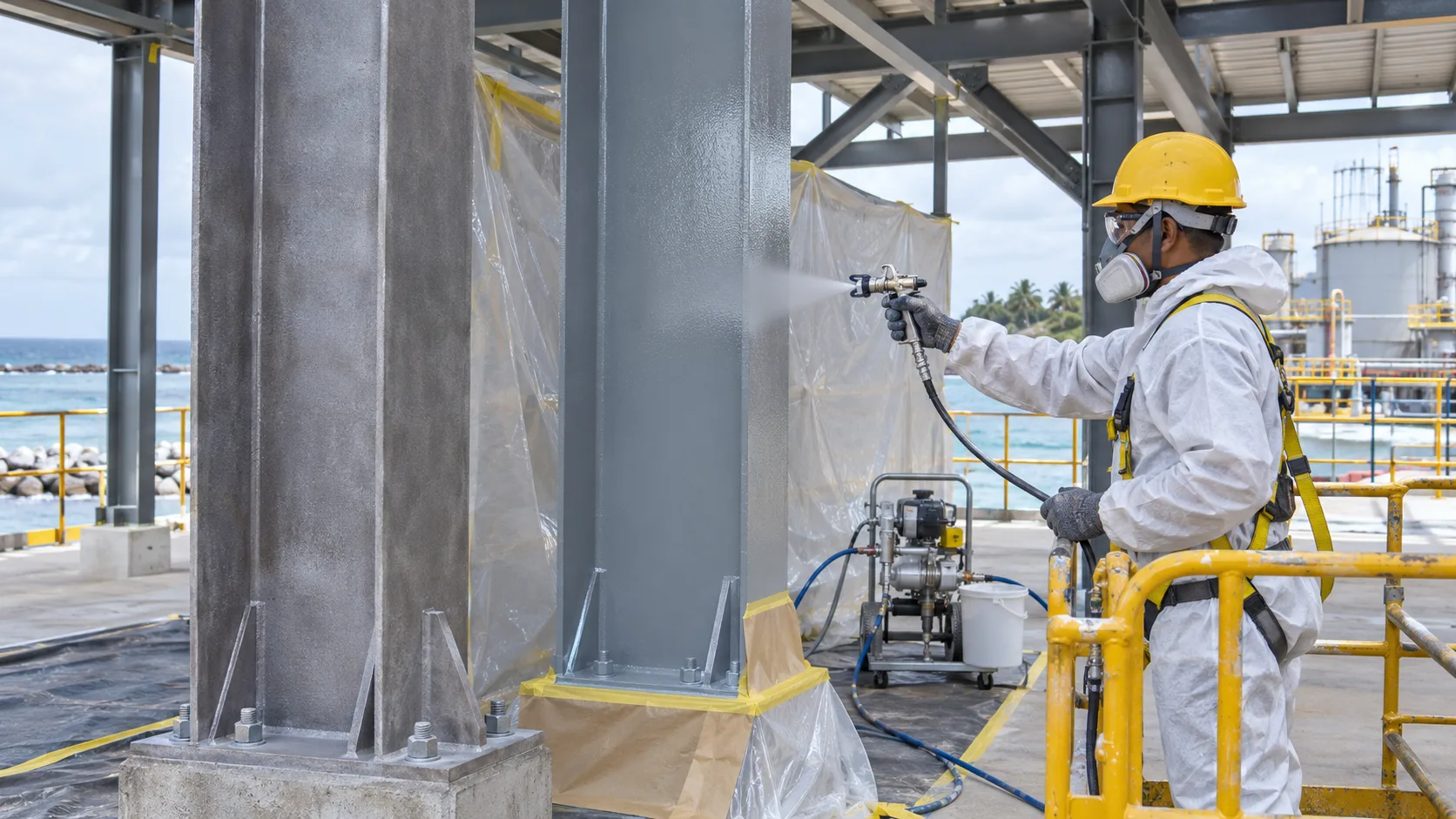
- Isolate the work area and protect people, equipment and the environment.
- Inspect steel condition, welds, edges, bolts and existing coating.
- Remove grease, salt and other surface contaminants.
- Prepare steel to the specified cleanliness and profile.
- Remove dust and verify salt, profile and environmental readings.
- Stripe-coat edges, welds, bolts and difficult geometry.
- Apply each full coat within its permitted conditions and recoat window.
- Measure dry-film thickness and repair holidays or damage.
What each coating layer does
The primer bonds to prepared steel and provides the first corrosion-control layer. High-build epoxy intermediate coats add barrier thickness and resistance to moisture and chemicals. A compatible polyurethane or other weather-resistant finish commonly provides colour retention and ultraviolet durability on exterior steel.
Stripe coats protect edges and welds
Liquid coatings pull away from sharp edges as they cure, leaving less film where corrosion often begins. Rounding edges where practical and applying an extra stripe coat by brush or roller helps achieve coverage around welds, bolts, corners and cut-outs before the full coat is applied.
Control temperature, humidity and dew point
Steel temperature must remain sufficiently above the dew point to prevent invisible condensation during preparation and coating. Monitor air temperature, relative humidity and steel temperature throughout the shift. Rain, sea mist or rapid evening cooling can make an apparently dry surface unsuitable within minutes.
Inspect thickness and continuity
- Wet-film checks during application to control coverage
- Dry-film thickness readings after each relevant stage
- Visual inspection for pinholes, runs, misses and overspray
- Holiday testing where the specification and system require it
- Adhesion or cure checks for critical applications
- Repair records for transport, erection and access damage
More thickness is not always better. Excessively thick coats can trap solvent, crack or exceed product limits. The target is a continuous system within the specified range, including difficult details—not a high average that hides thin edges.
Plan maintenance before widespread failure
Regular washing can reduce salt accumulation on accessible steel. Inspect coating damage, rust staining, joints and water traps at planned intervals. Local repairs made while most of the system remains sound are usually less disruptive than waiting until corrosion spreads beneath broad areas of coating.
Coastal steel coating FAQs
- Can rust be painted over with an epoxy coating?
- Only systems specifically designed for the achieved preparation should be used. Loose rust, salts, grease and failed coating still need removal; otherwise adhesion and corrosion control will be unreliable.
- Why use polyurethane over epoxy outdoors?
- Many epoxies provide strong barrier and chemical resistance but chalk under ultraviolet exposure. A compatible polyurethane finish can improve exterior colour and UV durability.
- How long will a coastal steel coating last?
- Service life depends on exposure, preparation standard, system thickness, detailing, application quality and maintenance. A project specification should define the target durability and inspection plan.
Industrial protective coatings by H.E. Engineering
H.E. Engineering applies epoxy, polyurethane and other protective coating systems to concrete and steel in Sri Lanka and the Maldives. Our work coordinates access, preparation, environmental monitoring, application and quality-control records for the required exposure.