
Lift Pit Waterproofing in Sri Lanka: Causes and Repair Options
An elevator pit sits at one of the lowest points in a building, often below the surrounding ground-water level. Water can reach it through the concrete itself or through defects created during construction. Reliable lift pit waterproofing in Sri Lanka must resist the actual water pressure and remain compatible with elevator equipment and maintenance access.
Even shallow water deserves attention. Persistent dampness can corrode brackets, rails, fixings and reinforcement, damage electrical components, encourage mould and create unsafe working conditions. Repeated pumping removes the symptom but does not seal the route by which water enters.
Where does water enter a lift pit?
- The construction joint between the base slab and pit walls
- Cracks caused by shrinkage, settlement or structural movement
- Honeycombed or poorly compacted concrete
- Formwork tie holes and abandoned sleeves
- Cable, drainage and other service penetrations
- Defective external membranes or waterstops that are no longer accessible
Start by mapping the leak
Record whether water appears continuously, after rain, during a rise in groundwater or only when nearby services operate. Mark active points and damp zones after the pit is safely cleaned. The visible drip may be some distance from the original entry because water can travel along reinforcement or joints before emerging.
Check nearby drainage, sumps, water lines and basement walls. A failed pipe or blocked drain needs a different remedy from groundwater pressure. Elevator equipment should be isolated or protected under the direction of the lift contractor before intrusive waterproofing work begins.
Repair active water with controlled injection
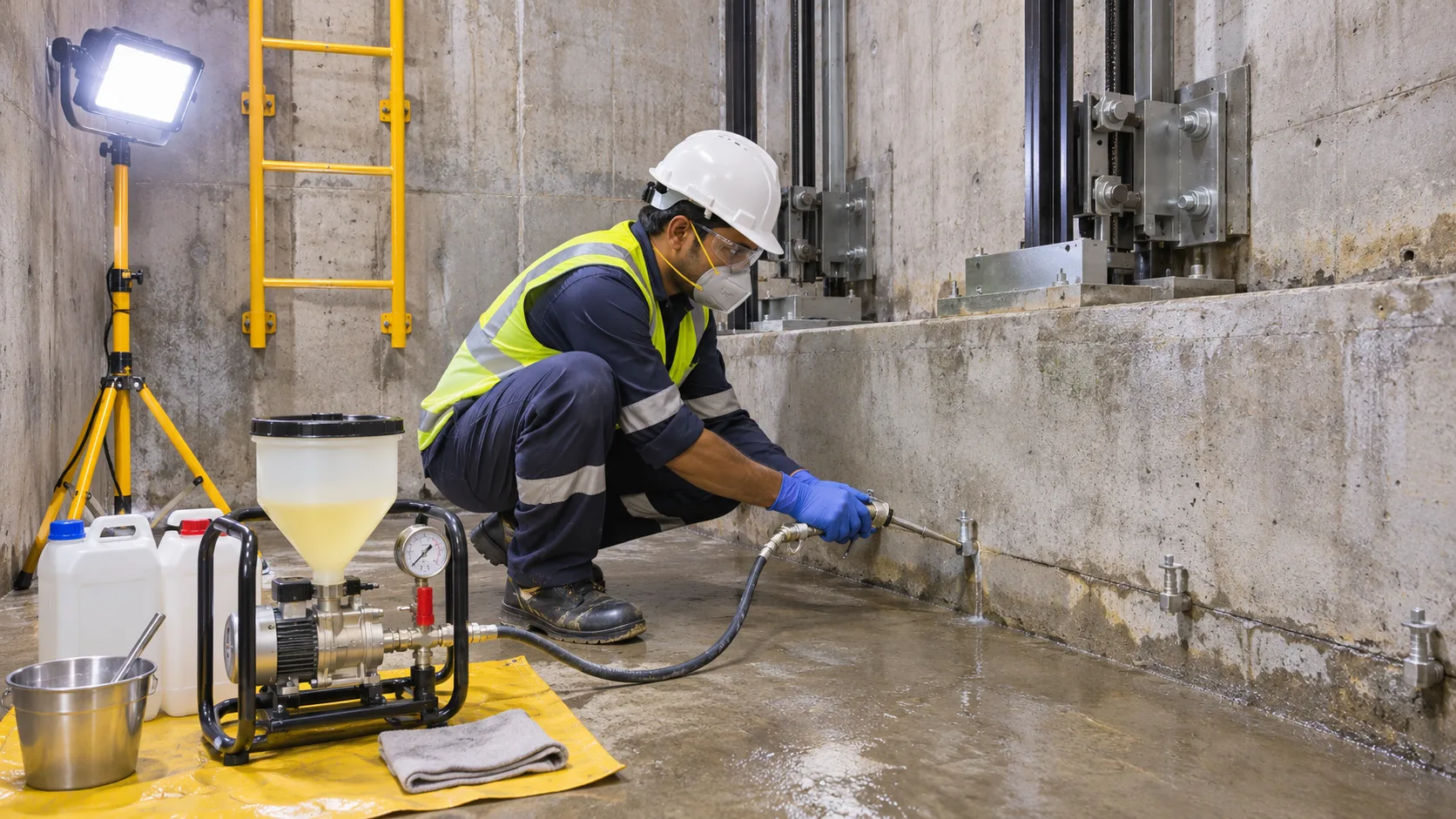
Water-reactive polyurethane resin can be injected through ports to follow and seal active seepage paths. The material, reaction time and injection pressure must suit the joint or crack. Excessive pressure can damage weak concrete or send resin into unintended areas, so the work should be staged and observed carefully.
- Confirm the defect and the extent of the active leak.
- Set out injection ports at spacing suited to the concrete and water path.
- Drill without damaging critical reinforcement or embedded services.
- Flush or condition ports where the selected system requires it.
- Inject in a controlled sequence while monitoring adjacent ports.
- Allow the resin to react, then inspect for remaining seepage.
- Remove or finish ports and reinstate the surface with compatible mortar.
Repair defective concrete before coating
Loose, cracked or honeycombed concrete cannot support a durable coating. Remove unsound material, clean and treat exposed reinforcement where needed, and rebuild the section with a suitable repair system. Tie holes and penetrations should be opened, cleaned and sealed to a defined detail rather than covered with a thin skim.
When internal waterproof coatings are useful
Where the outside face is inaccessible, a negative-side cementitious or crystalline treatment may reduce moisture entering through sound concrete. The product must tolerate the expected hydrostatic pressure and bond to a properly prepared mineral substrate. It should complement local crack and joint repairs, not conceal active defects beneath a broad coating.
Treat the wall-floor joint as a movement zone
The junction between the pit wall and base is a frequent leak path because two pours meet there and stresses concentrate at the change in geometry. A repair specification may include injection, a formed fillet, reinforcement or a flexible band, depending on movement, pressure and the chosen waterproofing system.
Drainage and pumping are supporting controls
- Keep perimeter drains and basement sumps clear and serviceable
- Confirm pumps have suitable capacity, alarms and backup arrangements
- Direct discharge away from the foundation
- Prevent surface water from collecting beside basement walls
- Inspect after intense rain and seasonal groundwater changes
Drainage can reduce water load, but a pump should not be the only defence for a pit that was designed to remain dry. Waterproofing and water management should work together so one blocked drain does not immediately flood sensitive equipment.
How to verify the repair
Inspect the pit over a meaningful period that includes rain or normal groundwater conditions. Record moisture at repaired points and watch interfaces around penetrations. Do not reinstall vulnerable finishes or return equipment to normal operation until the waterproofing, repair mortar and protective coatings have cured and passed inspection.
Lift pit waterproofing FAQs
- Can a leaking lift pit be repaired from inside?
- Often yes, particularly with injection and negative-side systems, but success depends on identifying the entry path and preparing sound concrete. External repair remains preferable where it is accessible and practical.
- Will cement plaster stop groundwater seepage?
- Ordinary plaster is not designed to resist active hydrostatic pressure. It may debond or redirect water unless the defect is sealed and a suitable waterproof system is installed.
- Why does a lift pit leak only during the monsoon?
- Rain can raise groundwater and increase pressure against below-ground concrete. Surface drainage defects can also concentrate water around the foundation during storms.
Lift pit leak repair by H.E. Engineering
H.E. Engineering provides injection grouting, concrete repair and waterproofing for lift pits, basements and other below-ground structures in Sri Lanka and the Maldives. Our team diagnoses the leak path and combines compatible repairs into one coordinated method.