
External Wall Waterproofing in Sri Lanka: Stopping Rain Ingress
Wind-driven monsoon rain can move sideways across a façade and enter openings too small to see from the ground. The damp patch inside may appear below or beside the actual entry point because water travels behind render, along joints or through masonry. Good external wall waterproofing in Sri Lanka therefore starts with tracing the route rather than coating every surface immediately.
High humidity can also cause condensation, plumbing leaks can wet walls from within, and roof or balcony defects can feed water down a façade. Separating these causes matters because each requires a different repair.
Common signs of external wall rain ingress
- Damp patches become darker during or shortly after wind-driven rain
- Paint bubbles, flakes or develops salt deposits on the inside face
- Mould returns in the same location despite cleaning and repainting
- Cracks or open joints are visible around windows and façade panels
- Water staining follows a parapet, sill, service pipe or slab edge
- Previous patch coatings crack or peel while the surrounding wall remains exposed
Start with the building details above the damp area
Inspect parapet tops, coping joints, roof-wall junctions, balcony edges, window heads, sills and service penetrations. Check whether drips and slopes direct water away from the wall. A sound coating cannot correct a sill that falls inward or a coping joint that repeatedly channels water into the façade.
On multi-storey buildings, use safe access to inspect the wall at close range. Binocular or drone observations can help map defects, but touch testing and local opening may still be needed to assess loose render, joint condition and coating adhesion.
Repair cracks according to their behaviour
Fine, dormant surface cracks may accept a compatible flexible repair before recoating. Wider, recurring or stepped cracks can indicate movement between materials or a structural issue. Record their pattern and determine the cause before filling them; a rigid filler placed in an active crack often opens again beside the repair.
- Remove loose paint, render, dirt, algae and chalking material.
- Open and prepare cracks only as required by the selected repair system.
- Repair hollow or detached render and allow it to cure.
- Replace failed sealant around windows, panels and penetrations.
- Correct defective sills, flashings, copings and drainage details.
- Confirm substrate moisture and adhesion before applying primer or coating.
Window and service joints need flexible seals
Frames, concrete, masonry and pipes move differently with temperature and loading. Perimeter seals should have the correct joint shape, backing material and adhesion faces so the sealant can stretch without tearing. Smearing sealant over an old joint may hide the gap temporarily but rarely restores proper movement capacity.
Choose an exterior coating for the actual exposure
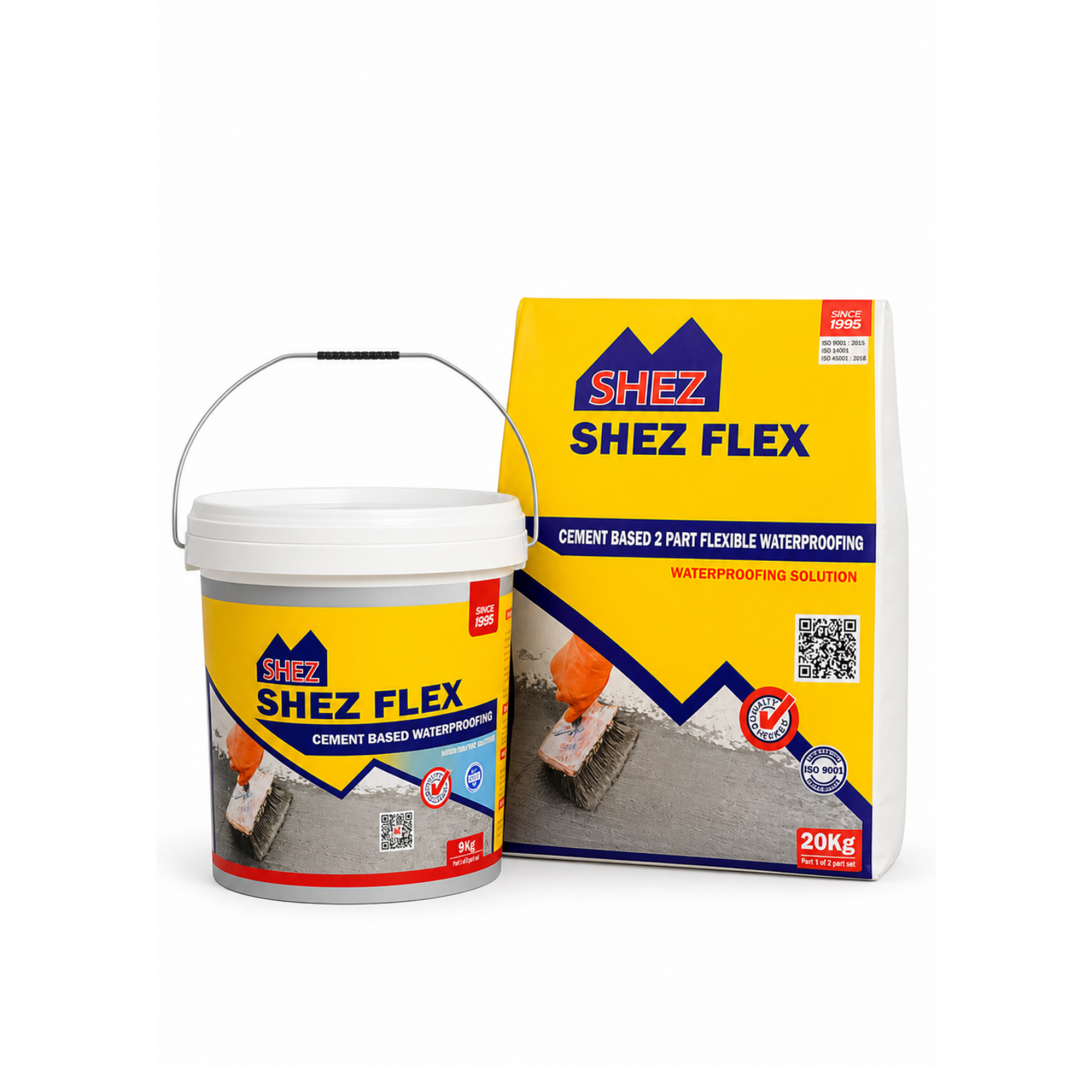
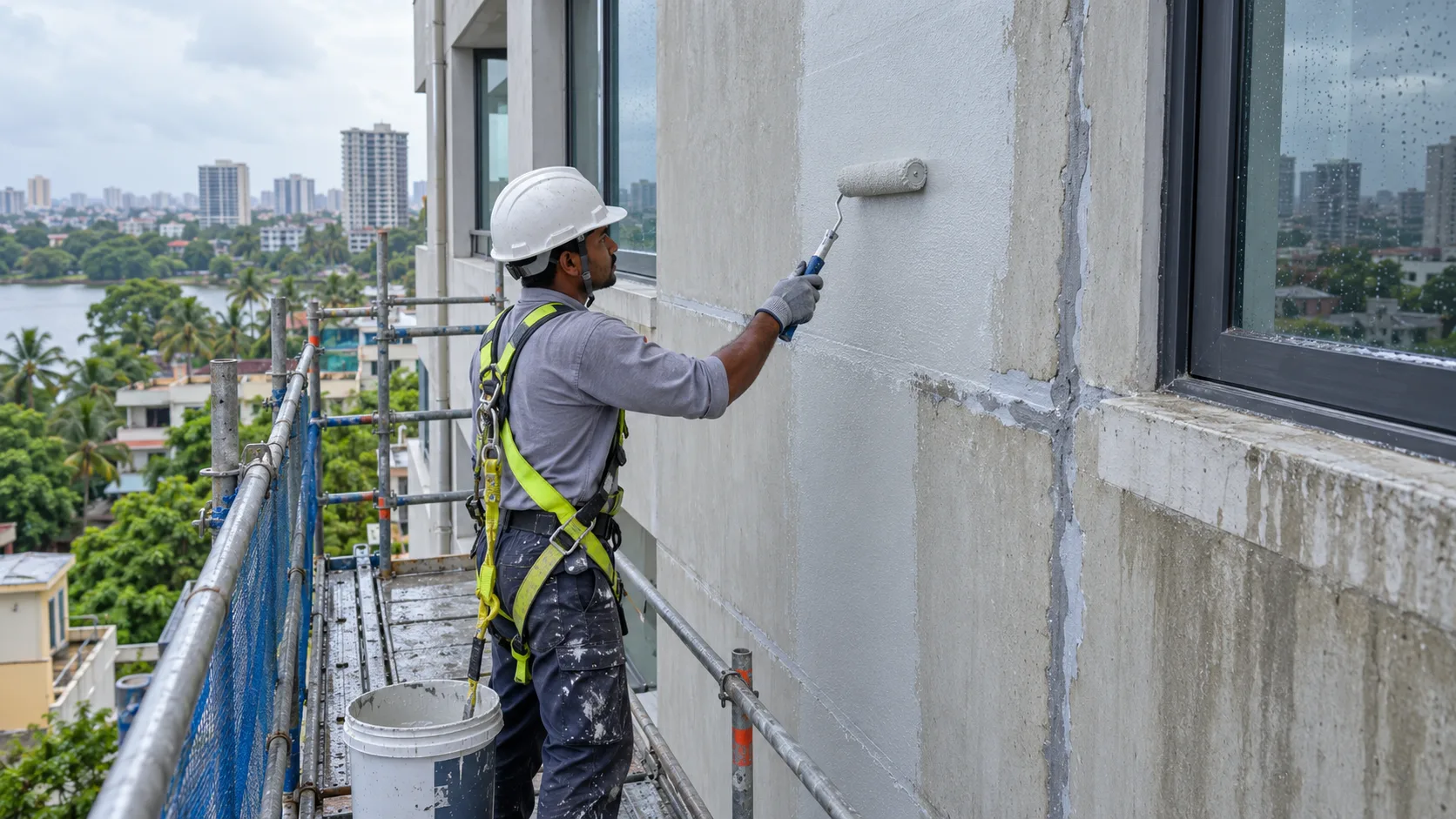
A suitable façade coating should resist rain and ultraviolet exposure while remaining compatible with the substrate and allowing appropriate vapour movement. Elastomeric coatings can bridge limited hairline cracking, while anti-carbonation systems add protection for reinforced concrete. Neither should be expected to span major movement joints or cover unsound render.
Apply the specified primer, number of coats and coverage under suitable weather conditions. Rain, very hot surfaces or trapped moisture can affect curing and adhesion. Sample areas help confirm colour, texture and compatibility before a whole elevation is treated.
Why inside-only damp repairs fail
- Water continues entering and pushes paint or filler from behind
- Moisture remains trapped within render and masonry
- Salt deposits contaminate the new finish
- Mould returns because the wall never dries
- Hidden reinforcement corrosion can continue in concrete walls
How to confirm the repair worked
Record the repaired locations and inspect them after suitable curing and subsequent rain. Controlled spray testing may be useful when carried out in a planned sequence that isolates one detail at a time. Interior finishes should be reinstated only after the wall has had enough time to dry.
External wall waterproofing FAQs
- Can waterproof paint stop rain coming through a wall?
- It can help on a sound, prepared and suitably detailed façade, but it will not reliably seal open joints, major cracks, defective windows or water entering from a roof or balcony above.
- Should exterior walls be waterproofed from inside or outside?
- Where practical, stop rain at the exterior face before it enters the wall. Interior treatment may manage symptoms or specific constraints, but the external defect should still be identified.
- Why does wall dampness appear only during certain storms?
- Wind direction and intensity can drive rain into one elevation, joint or opening. Comparing weather conditions with the damp pattern helps narrow the likely entry point.
Façade protection from H.E. Engineering
H.E. Engineering repairs façade cracks and joints and installs waterproof, elastomeric and anti-carbonation coatings for buildings in Sri Lanka and the Maldives. We coordinate access, preparation, local repair and protective finishing around the actual cause of water entry.